Cartagena has a reputation for its colonial walls, colorful streets and Caribbean views. What often surprises first-time visitors is the food. The local cuisine isn’t a side note to the trip — it’s one of the reasons people come back. A bowl of seafood stew cooked in coconut milk, a fried corn cake stuffed with egg from a street cart, a ceviche eaten at a table ten feet from the water. These aren’t tourist experiences. They’re what Cartagena actually eats.
This guide covers the dishes worth trying, the neighborhoods where the food is best and some practical advice for eating well in a city where the gap between a great meal and a mediocre one is mostly about knowing where to look.
If you’re staying in Bocagrande, you’re already in a good position. The neighborhood has the highest concentration of restaurants in the city, and the historic center — where the most interesting food scene is — is under ten minutes by cab.
Quick answer
What is the traditional food of Cartagena? The most representative dishes are arroz con coco (coconut rice), shrimp ceviche, patacones (fried plantain), arepa de huevo (egg-stuffed fried corn cake), cazuela de mariscos (seafood stew) and sancocho de pescado (fish soup). The foundation of Cartagena’s cuisine is fresh seafood, plantain, coconut and local spices.
Where should I eat in Cartagena? The three main areas are the Historic Center (traditional and fusion cooking), Bocagrande (variety and solid value) and Getsemaní (local, authentic and more affordable).
Is food expensive in Cartagena? It depends on where you eat. A street breakfast can cost under $1.50 USD. A dinner at a restaurant in the Historic Center can run $30 USD or more per person. Bocagrande has reasonable options across all price ranges.
Where Cartagena’s flavors come from
The city’s cuisine didn’t come from a single tradition. It built up over three centuries of layered influence. African heritage brought frying techniques, coconut as a core ingredient and plantain in every form. Indigenous communities contributed yuca, corn and ají. Spanish colonial cooking added rice, slow-cooked stews and the emphasis on seafood as a main course.
The result isn’t a calculated fusion. It’s what happens when a coastal city cooks with what it has nearby, generation after generation, without too much theory involved. Shrimp, red snapper, lobster, crab — it all comes fresh because the water is right there. Coconut shows up in rice, sauces and desserts because the trees grow along the shore. The seasoning comes from hands that learned from other hands.
The dishes that are worth your time
Arroz con coco
The essential side dish across the entire Colombian Caribbean coast. Made with coconut milk, white rice and sometimes raisins or toasted coconut, it has a subtle sweetness that works particularly well with seafood. No coastal table is complete without it.
Shrimp ceviche
Cartagena’s ceviche has its own identity — creamier and less acidic than Peruvian or Mexican versions. Fresh shrimp, lime, tomato, onion and sometimes avocado. It’s the most ordered starter in Bocagrande restaurants and a reliable way to start any lunch near the water.
Arepa de huevo
The icon of Caribbean Colombian street food. A fried corn cake stuffed with egg — and sometimes ground beef — best eaten in the first hours of the morning when the dough is fresh. Available at local friterías and markets. It’s not a sit-down experience, but it doesn’t need to be.
Patacón con hogao
Green plantain pressed flat and fried twice, topped with hogao — a tomato and onion sofrito that locals put on nearly everything. On its own it’s good. With shrimp or seafood piled on top, it becomes a full plate. It shows up in almost every local menu in the city.
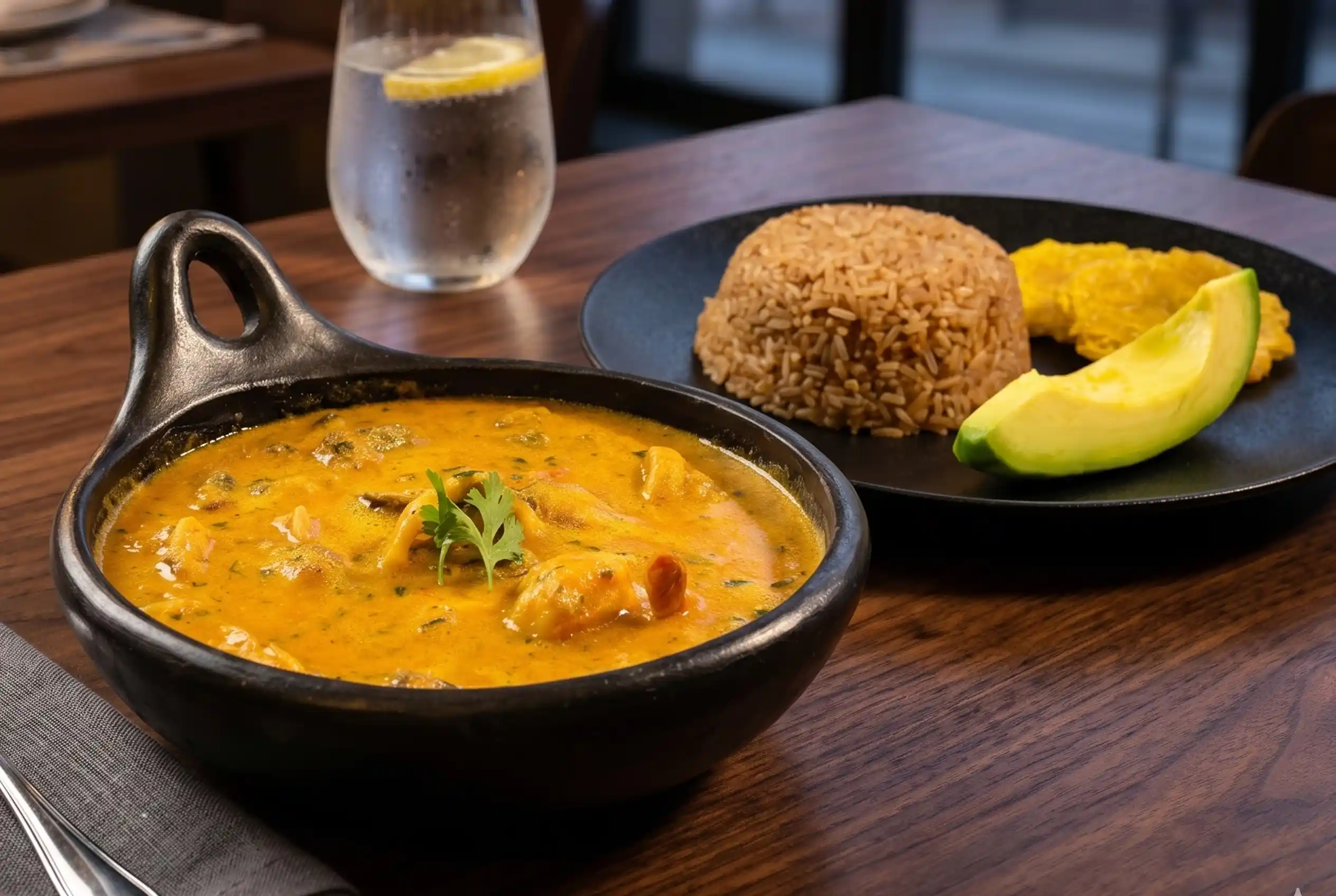
Cazuela de mariscos
A thick, hearty stew made with a mix of shrimp, squid, mussels and crab cooked in coconut milk and spices. One of the most substantial dishes in Cartagena’s cooking and one that best captures the local combination of coastal ingredients and slow technique. Order it for dinner with coconut rice on the side.
Sancocho de pescado
The coastal version of Colombia’s national sancocho. A generous broth with fresh fish, yuca, plantain and ñame, cooked slowly. It’s Sunday food in Cartagena households and surprisingly hard to find well-made in tourist restaurants. The further you get from the main tourist circuit, the better it tends to be.
Posta negra cartagenera
Beef cooked slowly in a dark sauce of panela (raw cane sugar), spices and local condiments. The result is tender meat with a deep, slightly sweet flavor that reflects the African influence in the city’s cooking. A good reason to step away from the seafood menu for a night.
Shrimp cocktail
Fresh shrimp with pink sauce, lime and sometimes avocado. Simple, direct and very hard to improve when the shrimp is actually fresh. It’s on virtually every seafood restaurant menu in Bocagrande and the Historic Center. If the shrimp came in that morning, don’t overthink it.
The food neighborhoods of Cartagena
Historic Center
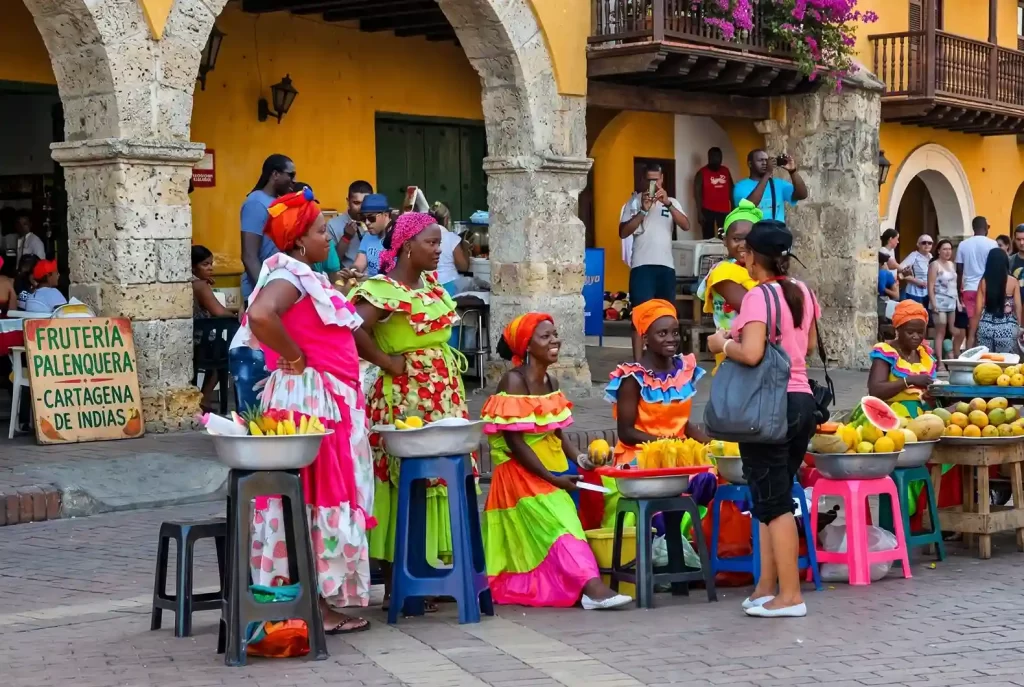
The walled city has the most recognized restaurants in Cartagena. Traditional Caribbean cooking coexists with fusion and creative proposals that have earned national attention. The streets of Getsemaní, the San Diego neighborhood and the area around Plaza de Santo Domingo have the highest concentration of options. Prices are higher than the rest of the city, but the range goes from a bowl of mondongo at a no-frills local spot to tasting menus with wine pairings.
Bocagrande
The hotel and residential neighborhood has the most variety in terms of cuisine type: seafood restaurants, international cooking, pizza, fast food, casual Colombian. It’s not where you go for the most authentic experience, but the value is reasonable and the concentration of options makes it easy to eat well without planning much in advance.
Getsemaní
The most authentic neighborhood in the Historic Center is also the most affordable for eating. Traditional friterías, home-cooking restaurants and some emerging spots with more interesting menus than the main tourist area. If the menu is handwritten on a chalkboard and the place has four tables, that’s usually a good sign.
La boquilla
The fishing community north of Bocagrande has seafood spots that cook fish and shellfish fresh with recipes that haven’t changed in decades. No Instagram-optimized décor. Fresh product and direct preparations. Worth the trip if you want to eat outside the usual circuit.
What to expect at different types of restaurants
| Type | Setting | Price Range | Best For |
| Street fritería | Informal, counter or small table | Very low | Quick breakfast, arepa de huevo |
| Seafood restaurant | Casual, many with sea views | Moderate | Lunch or dinner without fuss |
| Traditional Cartagena cooking | Cozy, colonial décor | Moderate-high | Dinner with local dishes |
| Fusion / fine dining | Elegant, mostly Historic Center | High | Special occasion |
| Hotel restaurant | Comfortable, on-site | Variable | Breakfast, dinner without going out |
Practical tips for eating well in Cartagena
- Restaurants with ocean views charge for the view. That doesn’t always mean the food is worth it. Check recent reviews before sitting down.
- Street food is best in the morning, made fresh. An arepa de huevo that’s been sitting under a heat lamp for two hours is a different thing entirely.
- In a coastal city, the catch of the day is always better than the fixed menu. Asking what came in fresh costs nothing.
- The heat in Cartagena is real. Natural fruit juices — corozo, maracuyá, mango — aren’t decorative. They’re part of the meal.
- In high season, the best-known restaurants in the Historic Center fill up. Reserving a day ahead avoids arriving to find no tables.
- Some of the best food in the city is in places with no online presence and no reviews. The décor and the authenticity rarely overlap.
Eating from Bocagrande: What the Hotel Regatta offers
Staying in Bocagrande puts the largest concentration of Cartagena’s restaurants within walking distance. From Hotel Regatta Cartagena, the Historic Center is under ten minutes by cab — easy enough to combine a morning on the beach with dinner in Getsemaní without logistical complications.
The hotel has its own restaurant and bar on the first floor, open from 6:30 AM to 2:00 PM, with the bar running until 7:00 PM. The continental breakfast for guests is served daily from 6:30 to 10:00 AM — a practical starting point before heading out to explore, especially when the heat is manageable in the early hours. Room service is available for nights when going out isn’t the plan.
The restaurant is also open to the public, not just hotel guests, which reflects the standard of service that goes beyond a basic hotel dining room.
Book direct with Hotel Regatta Cartagena
The best available rate is always on the hotel’s website, with no intermediary commissions. Bocagrande, the Caribbean in front of you and the Historic Center ten minutes away.
Frequently asked questions
What is the most iconic dish from Cartagena, Colombia?
Coconut rice with seafood is the dish that best represents the city’s cooking. Posta negra cartagenera and cazuela de mariscos are also distinctly Cartagena preparations that don’t taste quite the same anywhere else in Colombia.
Is street food safe to eat in Cartagena?
Generally yes. Spots with high customer turnover and a good local reputation are the standard choice for Cartagena residents themselves. Arepa de huevo friterías are among the most frequented and reliable. As in any city, visible hygiene conditions are a reasonable guide.
Where can I find fresh seafood in Cartagena?
Seafood restaurants in Bocagrande, the comedores in La Boquilla and some spots in the Historic Center work with fresh product. The key is asking what came in that day rather than ordering from a fixed menu. La Boquilla has particularly fresh seafood because the community has direct fishing activity.
What tropical fruits should I try in Cartagena?
Corozo, mango, guanábana, maracuyá and papaya are common in Cartagena’s markets and juice stands. Fresh fruit juices here are part of actual daily eating, not a tourist feature.
Do Cartagena restaurants accommodate dietary restrictions?
Restaurants in the Historic Center and Bocagrande aimed at international visitors usually have vegetarian options and are accustomed to specific requests. Traditional Cartagena cooking is built around seafood, meat and pork, so checking the menu before going is the most practical approach if there are dietary restrictions.
How much does a meal cost in Cartagena in 2026?
The range is wide. A street breakfast runs under 5,000 COP (roughly $1.25 USD). A casual lunch costs between 25,000 and 60,000 COP per person. Dinner at a Historic Center restaurant with a wine list can exceed 100,000 COP per person before drinks.