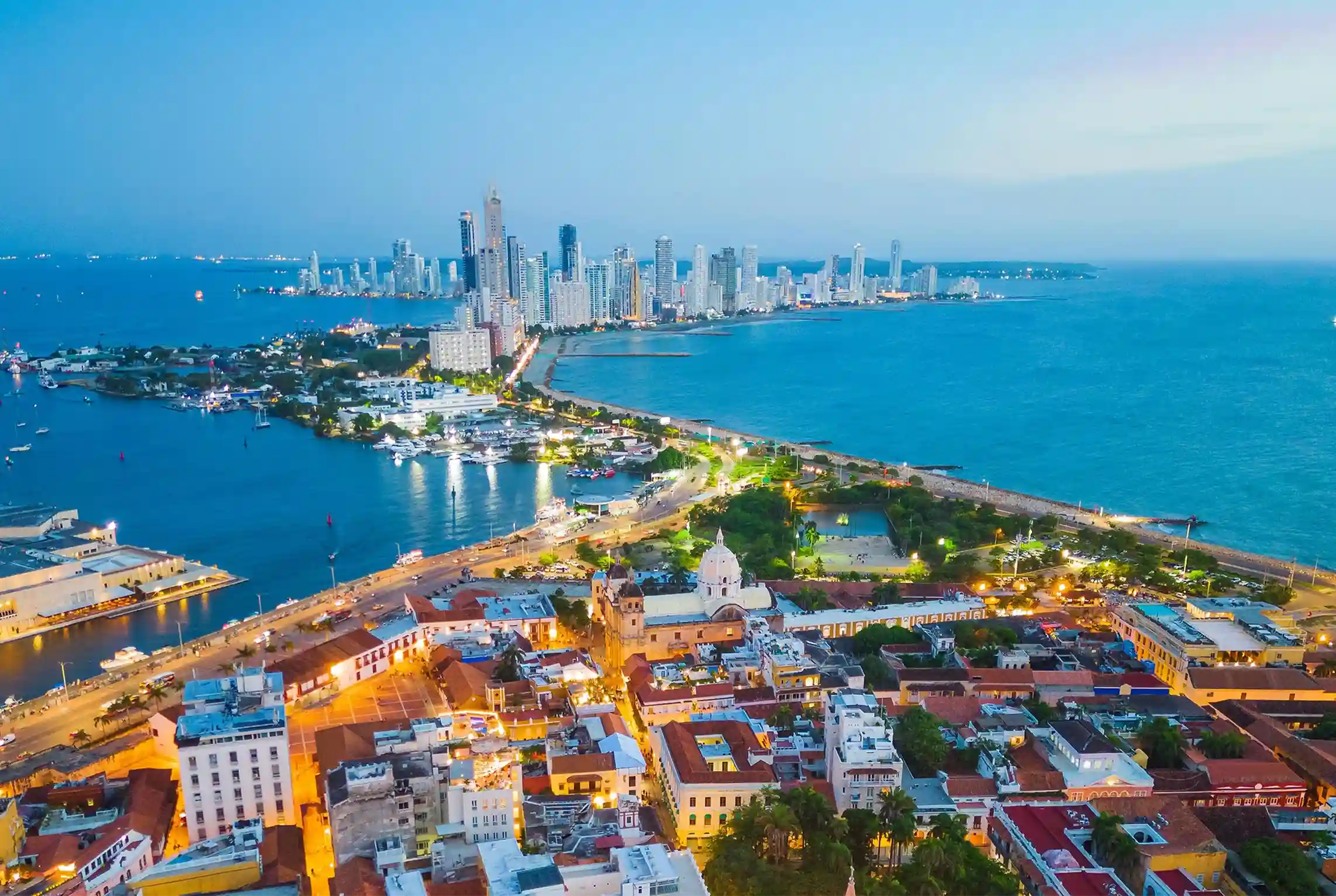
Cartagena is hot all year. That’s the first thing to accept. No cool season, no mild spring, no months where the heat drops to comfortable walking levels. The Colombian Caribbean works that way.
What does change is the rain, hotel prices, how many people are on the beaches, and sea conditions for island excursions. Those differences should drive the decision of when to go — not the vacation calendar of other cities.
Dry season: December to April
What most travel guides call “the best time to visit Cartagena.” That’s accurate on several counts.
What it has: Less rain, clearer skies, cooler nights thanks to the northern breeze, and generally cleaner water at Bocagrande beach. The Rosario Islands have the best underwater visibility of the year during these months.
What it doesn’t have: Quiet or low prices. December, January, and Easter week are peak periods across the entire Colombian coast. Bocagrande hotels hit full occupancy, reservations need to be made weeks in advance, and island tours fill fast.
What guides don’t mention: December through February coincides with the northern trade winds, which can generate swells on the speedboat crossing to the islands. If you get seasick easily, these months can be uncomfortable on the open water despite the nice weather on land.
Who it works for: Travelers with flexible budgets who prioritize weather, families on December or Easter breaks, and first-timers who want the most photogenic conditions.
Rainy season: May to November
The name creates the wrong impression. “Rainy season” in Cartagena isn’t gray, continuous days. It’s tropical downpours that arrive fast, last 20 or 30 minutes, and then the sun comes back at full strength.
What it has: Considerably lower hotel, flight, and tour prices. Fewer people on the beaches. Calmer seas, which make the boat crossing to the islands smoother. A city that runs at a more local, less tourist-heavy pace.
What it doesn’t have: Perfectly clear skies. Showers can interrupt outdoor activities for 30 to 60 minutes. Humidity is higher.
What guides don’t mention: July and August have a mini dry season called the veranillo del Niño — less rain than the rest of the period, with prices still well below December. It’s one of the best times of year to visit Cartagena if you want a balance between weather and cost. Most American travelers haven’t heard of it.
Who it works for: Travelers with flexible dates who prioritize value, honeymooners looking for privacy over festive atmosphere, and repeat visitors who want to see the city at a different pace.
Month by month
January: Full peak season. The Cartagena International Music Festival and the Hay Festival fill the city. Book well in advance. Maximum prices. Excellent weather.
February: Still peak season. Slightly less crowded than January but similar prices. Northerly winds that can stir up the sea.
March: Occupancy drops after Carnaval. Dry weather, prices still high but more availability. Easter week in March or April fills the city again.
April: If Easter falls in April, peak season again. If not, the transition to lower prices begins. Weather still good.
May: Official start of the rainy season. Prices drop noticeably. Beaches quiet down. Good time to go if dates are flexible.
June: Moderate rain. Low prices. Calm city. Seas quieter than the wind months.
July and August: The veranillo. Less rain, good prices, fewer people on the beaches. One of the best times of year to visit Cartagena.
September and October: Highest rain concentration of the year. Showers more frequent and can be intense. Minimum prices. For travelers who don’t mind rain and want the lowest cost, these are the months.
November: Transition back toward dry season. Rain starts easing. Prices still accessible.
December: Peak season from the 15th onward. The city fills for the holidays. High prices, festive atmosphere, maximum hotel demand.
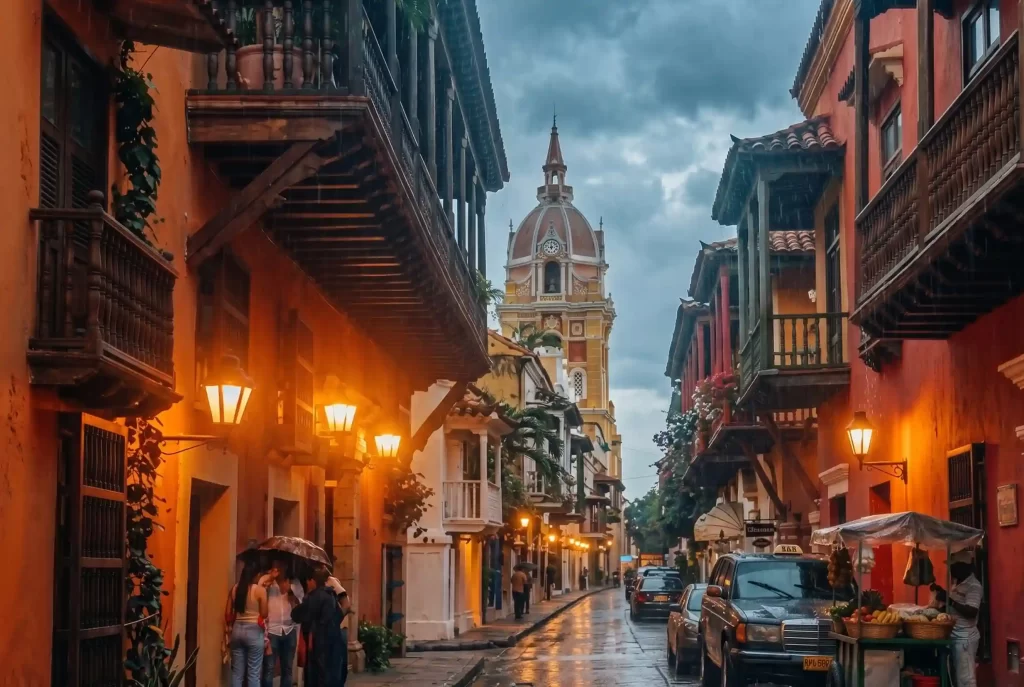
Cartagena’s heat: how to manage it
Temperatures range between 79 and 93°F year-round. Average humidity runs between 75 and 85 percent. That makes the heat feel more intense than the number suggests.
The worst hours are between 10am and 3pm. Planning outdoor activities for early morning (before 10am) or late afternoon (after 3pm) is the strategy that works best in any season.
The Caribbean breeze is constant in Bocagrande and makes a real difference. A beachfront hotel like Hotel Regatta, which takes advantage of that airflow, makes the heat significantly more manageable than hotels on interior streets with less circulation.
When to book
Peak season (December to April): At least 4 to 8 weeks in advance to guarantee the right room. Sea view rooms at Hotel Regatta sell before city view rooms.
Easter week and long weekends: 6 to 10 weeks out. These are the highest-demand periods of the year.
Rainy season (May to November): 1 to 2 weeks is usually enough. Last-minute availability is possible in this season.
Frequently asked questions
Does it rain a lot in Cartagena?
During the rainy season, showers are frequent but short. Not multi-day gray stretches. Tourist activities are minimally affected in most cases.
What’s the water temperature in Cartagena?
The Caribbean Sea in Bocagrande runs between 79 and 84°F year-round. There’s no season when the water is cold.
Is it safe to travel to Cartagena during the rainy season?
Yes. The rain is weather, not infrastructure. Hotels, restaurants, and tours operate normally. The only days island tours can be cancelled are those with very rough seas, which are independent of the rainy season.
When are there fewest tourists in Cartagena?
September and October have the lowest tourist volume of the year. May, June, and November also have fewer visitors than peak season.
Is the Cartagena music festival worth planning a trip around?
If you’re into classical music, the Cartagena International Music Festival in January is a serious event with concerts in the Historic Center. The Hay Festival — also in January — is good for those who enjoy literature and ideas. Both fill the city, so booking well in advance is non-negotiable for those dates.
What season is best for visiting the Rosario Islands?
For underwater visibility and snorkeling: the dry season (December to April). For calm seas and fewer people on the islands: the rainy season (May to November), especially July and August.
The booking worth making early
Sea view rooms at Hotel Regatta have consistent demand regardless of season. In peak season, the difference between booking 4 weeks out versus 4 days out can be the difference between waking up to the Caribbean or waking up to the city.
Book directly at Hotel Regatta Cartagena, reach us at reservas@cartagenaregatta.com or contact us on WhatsApp.