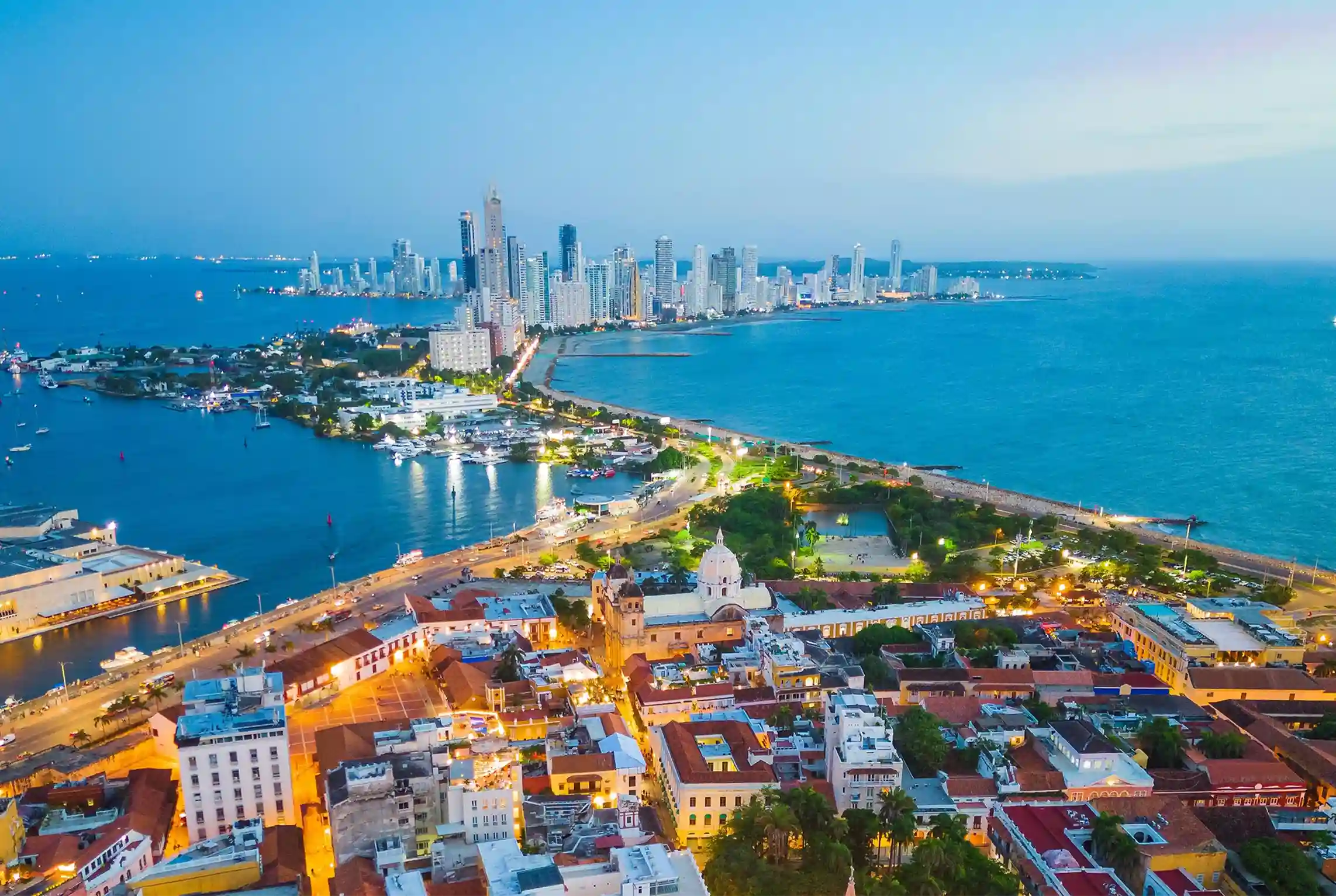
Cartagena is hot all year. That’s the first thing to accept. There’s no cool season, no mild spring and no month when daytime heat drops to comfortable walking temperatures. That’s simply how Colombia’s Caribbean coast works.
What does change is the rain, hotel prices, how crowded the beaches get and how rough the sea is for island trips. Those differences should drive your decision on when to go, not the vacation calendar back home.
Quick answer: The best month to visit Cartagena depends on your priorities. For weather, January through March is best, with little rain and clear skies. For price, September and October are the cheapest. For the best balance of weather and cost, go in July or August, during a short dry spell locals call the veranillo de San Juan. December, January and Holy Week (the week before Easter) are the most expensive and in-demand times for hotels.
The best month to visit Cartagena by weather and price
| If you want… | Best months | Why |
|---|---|---|
| The best weather | January, February and March | Dry season, clear skies and cooler, breezy nights |
| The lowest prices | September and October | Fewest visitors of the year and lowest rates, in exchange for more rain |
| A balance of weather and price | July and August | A mini dry season with less rain and prices below peak season |
| Snorkeling in the Rosario Islands | December through April | Best underwater visibility of the year |
| Calm seas for boat trips | May through November | Less north wind and smoother rides |
| A festive atmosphere | November and December | Independence Day festivities, Noche de Velitas and New Year’s |
Dry season: December through April
This is the season most guides call “the best time to visit Cartagena,” and in many ways they’re right.
- What you get: less rain, clearer skies, cooler nights thanks to the north breeze and generally cleaner water in Bocagrande. The Rosario Islands have their best underwater visibility of the year.
- What you don’t get: peace and quiet or low prices. December, January and Holy Week are the busiest times on Colombia’s entire coast. Bocagrande hotels fill up, people book weeks ahead and island tours sell out fast.
- What guides don’t tell you: December through February brings the northern trade winds, which can make the boat ride to the islands choppy. If you get seasick easily, the open water can be rough even when the weather on land is perfect.
- Who it’s best for: travelers with a flexible budget who put weather first, families on Colombian school breaks in December or Holy Week, and first-timers who want the most photogenic conditions.
If you’re traveling during these months, our guide to planning a Cartagena trip in high season helps you get around, eat well and skip the lines when the city is packed.
Rainy season: May through November
The name gives the wrong impression. “Rainy season” in Cartagena doesn’t mean gray days that never end. It means tropical downpours that roll in fast, last 20 or 30 minutes and then give way to full sun again.
- What you get: noticeably lower prices on hotels, flights and tours. Emptier beaches. A calmer sea, which makes boat rides smoother. A city that runs at a more local, less touristy pace.
- What you don’t get: the perfectly clear skies of the dry season. Downpours can pause outdoor plans for 30 to 60 minutes, and humidity runs higher.
- What guides don’t tell you: between late June and August, a mini dry season known as the veranillo de San Juan brings less rain than the rest of the period, with prices still well below December. It’s one of the best times of the year to go if you want a balance of weather and cost.
- Who it’s best for: travelers with flexible dates who put price first, honeymooners looking for privacy and repeat visitors who want to see Cartagena at a slower pace.
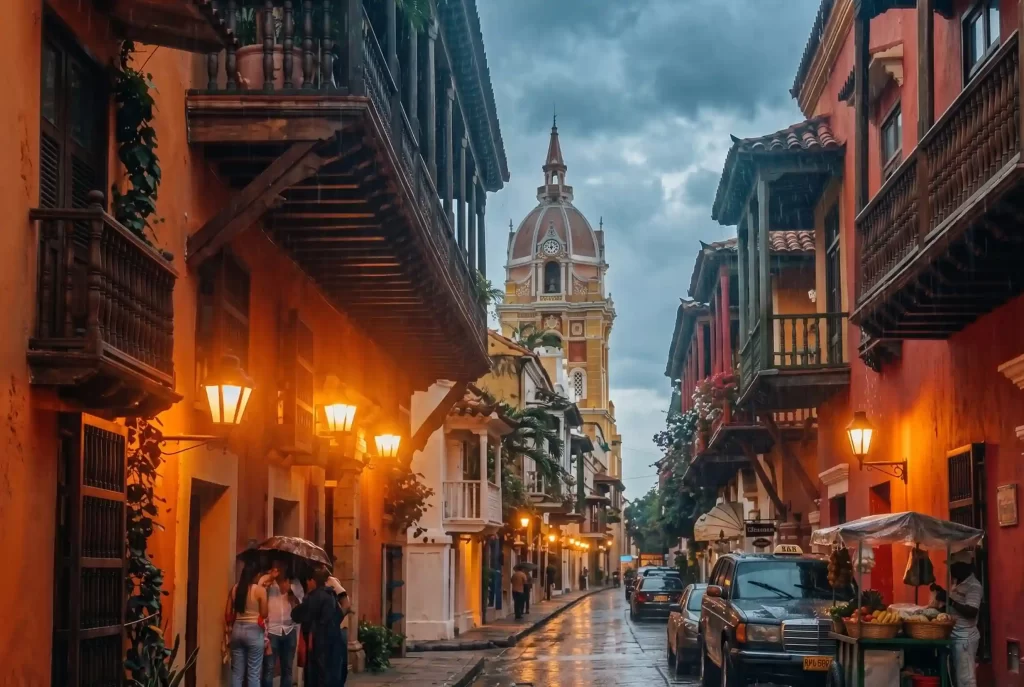
Cartagena month by month
- January: full peak season. The Cartagena International Music Festival and the Hay Festival fill the city. Book well ahead. Top prices. Excellent weather.
- February: still peak season. A bit less crowded than January, with similar prices. North winds can make the sea choppy.
- March: crowds thin out after Carnival. Dry weather, high prices but better availability. In 2027, Holy Week falls in late March and fills the city again.
- April: when Holy Week falls in April, peak season returns. Otherwise, prices start to drop. The weather is still good.
- May: the rainy season begins. Prices drop and beaches get quieter. A good month if your dates are flexible.
- June: moderate rain. Low prices. A quiet city. The sea is calmer than in the windy months.
- July and August: the veranillo. Less rain, good prices and less crowded beaches. One of the best times of the year to visit Cartagena.
- September and October: the rainiest months. Downpours are more frequent and can be intense. Rock-bottom prices. Ideal if you don’t mind rain and want the lowest rates.
- November: the shift toward the dry season. Rain starts to ease. Prices are still reasonable, and the Independence Day festivities are the big event of the month.
- December: peak season from the 15th on. The city fills up for the holidays. High prices, a festive mood and maximum hotel demand.
How to handle the heat in Cartagena
Temperatures range from about 79°F to 93°F (26°C to 34°C) all year. Average humidity sits between 75% and 85%, which makes the heat feel stronger than the thermometer suggests.
The most intense hours are from 10 a.m. to 3 p.m. Planning outdoor activities before 10 a.m. or after 3 p.m. is the strategy that works best in any season.
The Caribbean breeze is constant in Bocagrande, and it makes a real difference. A beachfront hotel like the Regatta, which catches that breeze, makes the heat easier to handle than a hotel on inland streets with less airflow. At midday, the best plan is the pool on the 11th or 18th floor, followed by a coconut lemonade or a fresh fruit juice at the hotel restaurant while the sun eases up.
When to book your hotel
- Peak season (December through April): at least 4 to 8 weeks ahead. Ocean-view rooms tend to sell out before city-view rooms.
- Holy Week and Colombian holiday weekends: 6 to 10 weeks ahead. These are the highest-demand periods of the year.
- Rainy season (May through November): 1 to 2 weeks is usually enough, and last-minute availability is common.
If you want to wake up facing the Caribbean, the Superior Room has a direct, front-facing ocean view. You can compare every category, from the Standard Room to the Sixtuple Suite, on our Hotel Regatta rooms page.
The booking worth making early
Ocean-view rooms at Hotel Regatta are in steady demand. In peak season, booking 4 weeks out versus 4 days out can be the difference between sleeping in front of the Caribbean or in front of the city.
Book direct with Hotel Regatta Cartagena: contact our team or message us on WhatsApp.
FAQ about the best time to visit Cartagena
What is the best month to visit Cartagena?
It depends on your priority. For weather, January through March. For price, September and October. For a balance of both, July and August.
Does it rain a lot in Cartagena?
In the rainy season, downpours are frequent but short. They aren’t all-day rains, and in most cases they barely affect sightseeing.
What is the ocean temperature in Cartagena?
The Caribbean in Bocagrande stays between about 79°F and 84°F (26°C to 29°C) all year. There’s no season when the water is cold.
Is it safe to visit Cartagena in the rainy season?
Yes. Hotels, restaurants and tours run as usual. The only days island tours may be canceled are when the sea is very rough, which doesn’t depend on the rainy season.
When are there fewer tourists in Cartagena?
September and October see the fewest visitors of the year. May, June and November are also quieter than peak season.
Is it worth planning a trip around the Cartagena festivals?
If you love classical music, the Cartagena International Music Festival in January offers top-quality concerts in the Old Town. The Hay Festival, also in January, is great for anyone who enjoys books and big ideas. Both fill the city, so booking well in advance is a must.
What’s the best season to visit the Rosario Islands?
For underwater visibility and snorkeling, the dry season (December through April). For calm seas and fewer people, the rainy season (May through November), especially July and August. If you’re planning the trip, see our guide to the Rosario Islands from Cartagena.