Cartagena has a cultural layer that many visitors never reach. They see the walls, Plaza de Santo Domingo and Castillo de San Felipe — all legitimate attractions — but the city has museums, galleries and cultural spaces that reveal a different dimension of the destination: the history of slavery and African resistance, colonial and contemporary art, Afro-Colombian identity and the way a 480-year-old city carries its past into the present.
This guide covers the most relevant museums and cultural spaces in Cartagena, what to expect at each, approximate hours and how to fit them into a travel itinerary.
Quick answer
What are the best museums in Cartagena? The Museo del Oro Zenú, the Basílica Menor de San Pedro Claver with its adjacent museum, the Palacio de la Inquisición and the Centro de Formación de la Cooperación Española are the most visited cultural spaces. For contemporary art, some galleries in the Historic Center and Getsemaní have interesting work.
How much does it cost to visit museums in Cartagena? Prices vary. The Museo del Oro has free entry. The Palacio de la Inquisición and the Basílica de San Pedro Claver have paid entry with differentiated rates for Colombian nationals and foreign visitors. Most have discounts for students and children.
Can you visit several museums in one day? Yes. The Historic Center concentrates the main museums within a walkable area. A well-organized day covers two or three cultural spaces with time for lunch and a neighborhood walk.
The main museums in Cartagena
Museo del Oro Zenú
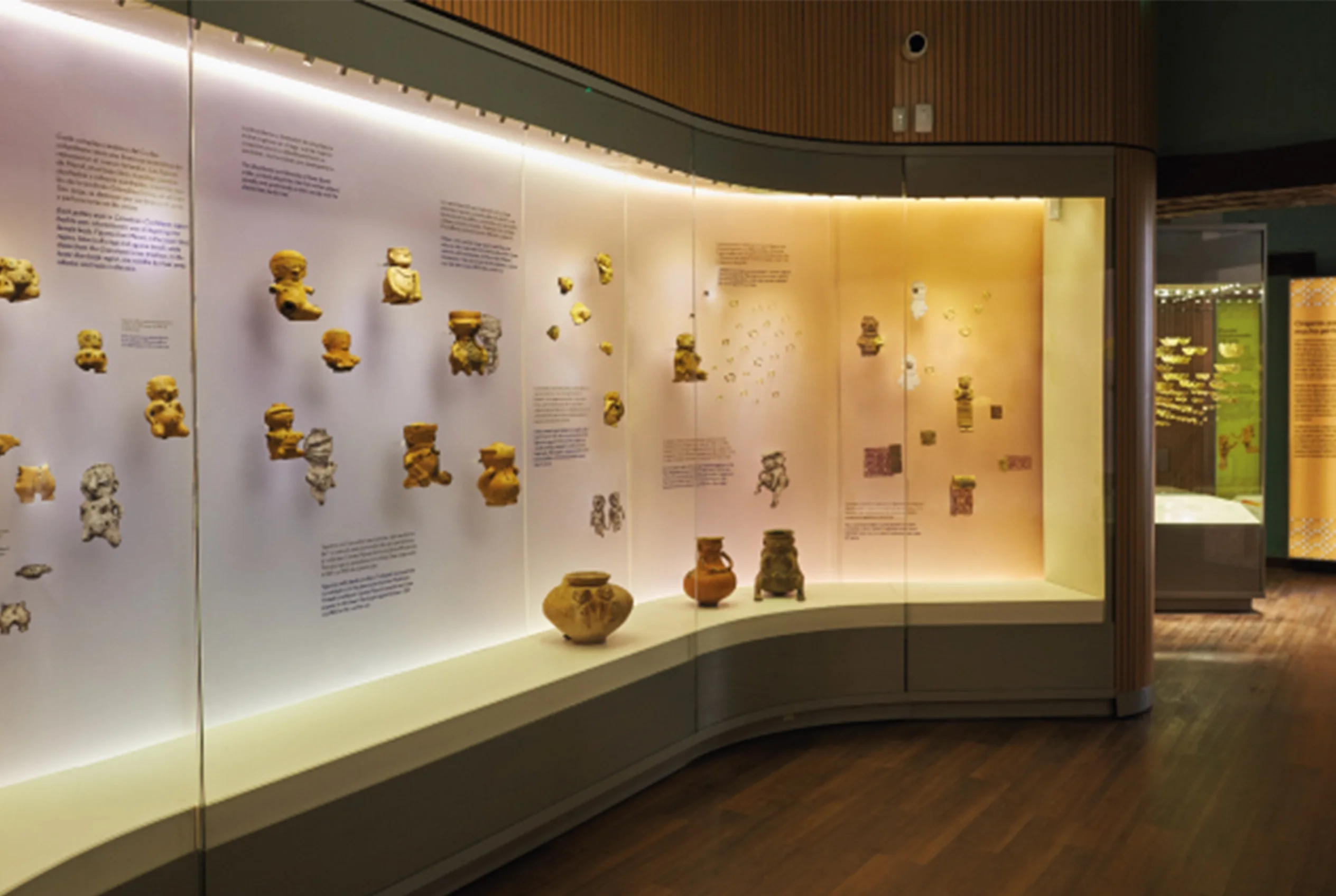
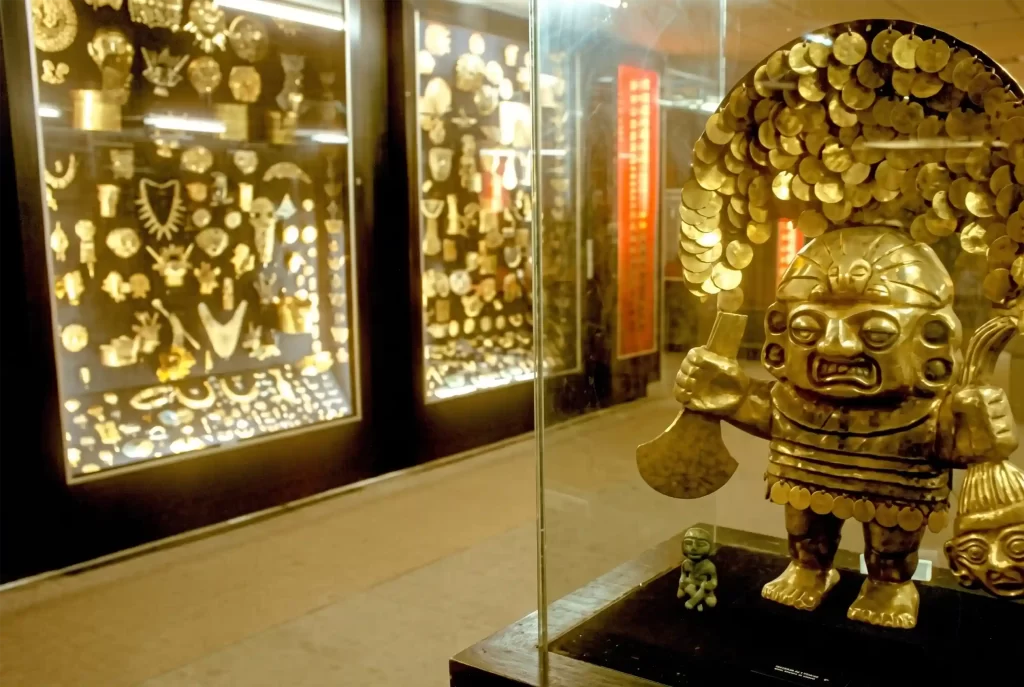
The Gold Museum in Cartagena is part of the Banco de la República network and exhibits pieces from the Zenú culture — the indigenous people who inhabited the Colombian Caribbean region before the Spanish arrived. The collection includes gold jewelry, ceramics and textiles that reflect the sophistication of that civilization.
Entry is free, making it one of the most accessible museums in the city. The space is smaller than the Gold Museum in Bogotá, but the collection has high-quality pieces and the exhibition is well contextualized.
Located on Plaza de Bolívar, in the heart of the Historic Center.
Basílica Menor de San Pedro Claver and its museum
The Basílica de San Pedro Claver is one of the most historically charged sites in Cartagena. The Jesuit priest Pedro Claver lived and died here in the 17th century after dedicating his life to assisting the enslaved Africans arriving at the port. The adjacent convent, now a museum, preserves Claver’s personal belongings, colonial-era documents and archaeological pieces.
The convent cloister is one of the most beautiful architectural spaces in the Historic Center: an interior courtyard with arched galleries, tropical plants and a quiet that contrasts with the movement of the streets outside.
The visit covers the church and the museum. Entry has a cost with differentiated rates for nationals and foreigners.
Palacio de la Inquisición
The Palacio de la Inquisición is one of the most recognizable buildings in the Historic Center for its baroque facade on Plaza de Bolívar. It served as the seat of the Holy Office of the Inquisition from the 18th century and is today a museum documenting that colonial period — with replicas of torture instruments, original documents and a collection of colonial weapons.
The visit is more confronting than comfortable, which is probably the point. The building itself is architecturally notable and the collection provides context for one of the darkest periods in the city’s history.
Centro de Formación de la Cooperación Española
This space, in a restored colonial house in the Historic Center, combines cultural programming with an art gallery and temporary exhibitions. The architecture of the building is an attraction in itself — one of the best examples of a restored colonial mansion in Cartagena, with interior courtyards, fountains and a scale that gives a real sense of how the colonial elite lived.
Temporary exhibitions change, so it’s worth checking what’s on during your visit.
Art in the streets: Getsemaní as an open gallery
Getsemaní is where Cartagena’s street art has the most presence. The neighborhood’s walls are covered with murals documenting the barrio’s history, Afro-Colombian identity, cultural resistance and the everyday life of Cartagena beyond the tourist circuit.
It’s not a museum with hours — it’s a walking route through streets where every wall has something to look at. The most well-known murals are on the streets around Plaza de la Trinidad and on the access routes into the neighborhood from the walled city.
Some operators offer street art tours of Getsemaní with historical and cultural context about the artists and the themes of each mural. For those who want to understand what they’re looking at, the guided tour adds a layer that a self-guided walk doesn’t always provide.
Casa Museo Rafael Núñez
Rafael Núñez served as President of Colombia four times and wrote the lyrics to the national anthem. The house where he lived in the El Cabrero neighborhood — outside the walled city but close to the Historic Center — is now a museum with his original furniture, documents and personal belongings.
It’s a small, quiet museum, off the main tourist circuit, which means few visitors make it there. The El Cabrero neighborhood has late-19th-century republican architecture that contrasts with the colonial style of the walled city and is worth a walk even if you don’t go inside the museum.
Teatro Heredia
The Teatro Adolfo Mejía — known as Teatro Heredia — is Cartagena’s main theater. Built in the 19th century and restored in recent decades, it functions as a cultural venue with theater performances, concerts and cultural events.
It’s not a museum in the traditional sense, but when there’s a performance it’s a cultural experience worth fitting in. Checking the program during your stay — especially during cultural seasons — is worth doing.
How to organize a cultural day in Cartagena
The Historic Center allows a walkable cultural route covering several museums in one day. A practical sequence:
Morning: Museo del Oro Zenú on Plaza de Bolívar (free, 45 minutes). Basílica de San Pedro Claver two blocks away (1 hour with museum). Walk through the cloister.
Midday: Lunch at a Historic Center or Getsemaní restaurant.
Afternoon: Palacio de la Inquisición on Plaza de Bolívar (1 hour). Walk through the Getsemaní murals at sunset (1 hour on foot).
That route covers the main cultural spaces of the walled city in one day without feeling rushed.
Using Hotel Regatta as a base for cultural days
From Hotel Regatta in Bocagrande, all Historic Center museums are 10 minutes by car. The restaurant serves breakfast from 6:30 AM, with continental breakfast for guests until 10:00 AM — early enough to leave for the museums before 9:00 AM, when the spaces are least crowded and the heat hasn’t peaked.
For afternoons returning from cultural visits, the rooftop pool is the most effective way to cool down before dinner. The bar runs from 12:00 PM to 7:00 PM for a drink before heading back out to the Historic Center for the evening.
For travelers who want historical context before visiting the museums, the history of Cartagena guide provides the framework that makes each visit more legible.
Book direct with Hotel Regatta Cartagena
Ten minutes from the Historic Center museums and with the Caribbean in front of the hotel. Best rate when booking direct.
Frequently asked questions
What is the most important museum in Cartagena?
The Museo del Oro Zenú and the Basílica de San Pedro Claver with its adjacent museum are the most historically significant. The Palacio de la Inquisición is the most recognized among international visitors. All three are in the Historic Center within a short walk of each other.
Are Cartagena museums open every day?
Most follow a Tuesday-through-Sunday schedule, closed on Mondays. Specific hours vary and may change on special dates. Confirming before going — especially during holiday periods — is worth the extra step.
Do Cartagena museums offer discounts for children?
Yes. Most museums have reduced rates for children and students. The Museo del Oro is free for everyone. The Basílica de San Pedro Claver and the Palacio de la Inquisición have differentiated pricing.
Can you take photos inside Cartagena museums?
In general, non-flash photography for personal use is permitted. Some collections have specific restrictions on particular pieces. Worth asking at the entrance to each space.
How much time should I dedicate to museums in a three-day trip to Cartagena?
One well-organized day covers the three main Historic Center museums plus the Getsemaní mural walk. For travelers with deeper cultural interest, two days allow for a slower pace and visits to less-known spaces like the Casa Museo Rafael Núñez.
Are there guided cultural tours available in Cartagena?
Yes. Operators with certified guides offer thematic tours through the Historic Center, including museum visits with detailed historical context. The hotel can advise on available cultural tour options during your stay.