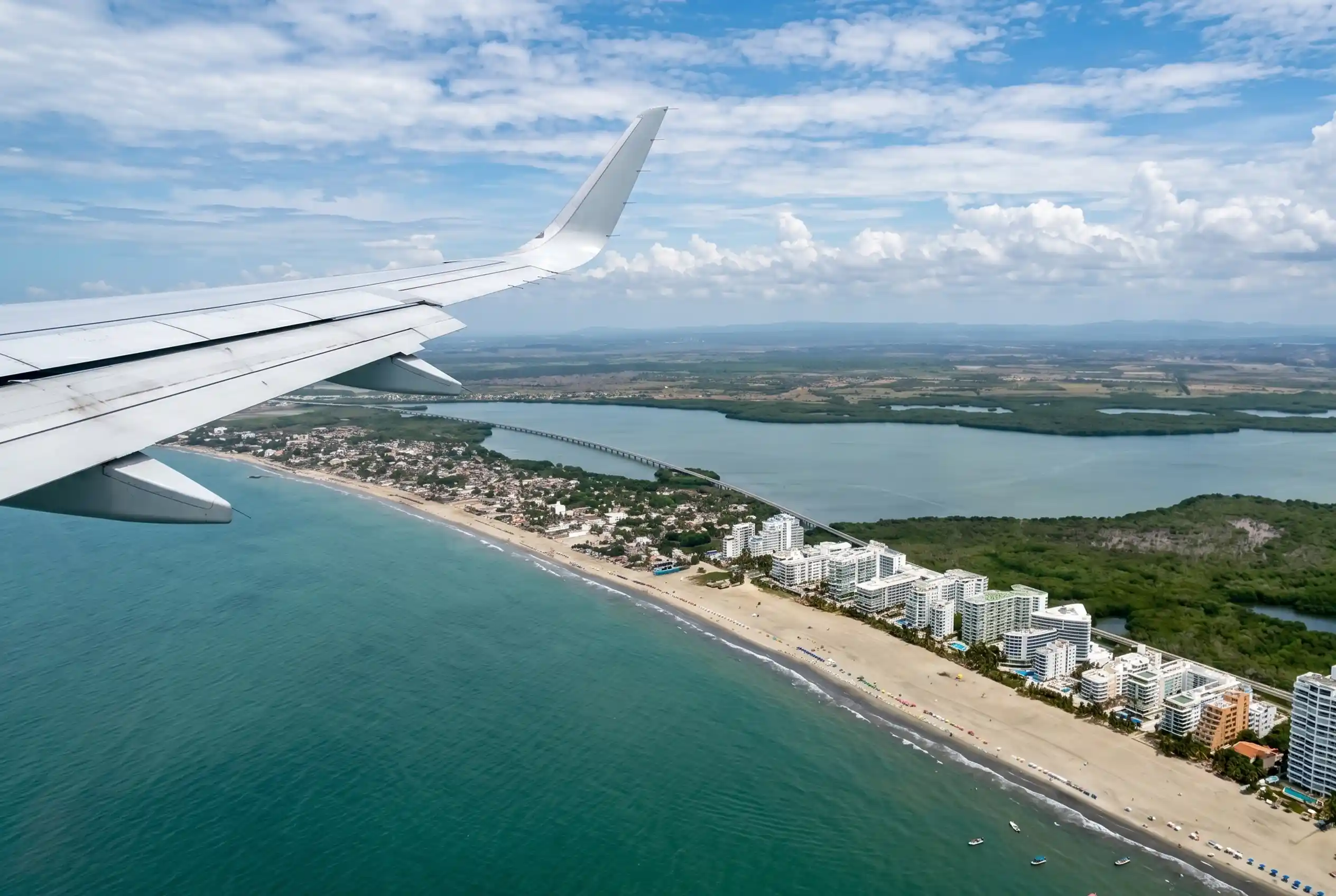
Cartagena doesn’t look like anywhere else in South America. The walled city is Spanish colonial, the neighborhoods are Caribbean, the food is coastal Colombian, and the whole thing sits on the edge of the Caribbean Sea. It’s a city that makes sense once you’re walking it, even if it’s hard to describe from the outside.
If this is your first time, the choices can feel overwhelming. This guide cuts through it: what’s worth your time, what order to do things in, and what to skip.
Getting oriented: the two Cartagenas
Most visitors spend time in two distinct areas that feel almost like separate cities.
The Historic Center is the walled colonial city, a UNESCO World Heritage Site since 1984. Cobblestone streets, flower-draped balconies, colorful facades, plazas with centuries of history, and the city walls that run along the Caribbean. This is where most of the cultural sightseeing happens.
Bocagrande is the modern beachfront neighborhood, about 10 minutes from the Historic Center by taxi. High-rise buildings along the waterfront, a long public beach, hotels, restaurants, and shopping. This is where most visitors stay, and for good reason: it’s practical, it has the beach, and it connects easily to everything else.
Hotel Regatta Cartagena is on Avenida Malecón in Bocagrande, facing the sea. For a first-time visitor, it’s one of the most practical bases in the city: beach out front, Historic Center a short taxi ride away, and all the logistics of a full-service hotel.
Walk the Historic Center walls at sunset
It’s the first thing most first-timers do and one of the few things that genuinely lives up to the expectation. The city walls that surround the old town stand between 11 and 15 meters high, with views over the Caribbean on one side and the colonial rooftops on the other.
The best stretch runs from the Santo Domingo Bastion toward Santa Catalina. Get there 30 minutes before sunset. There will be locals, tourists, vendors selling drinks, and a sky that turns orange and pink over the Caribbean. No entry fee.
Explore the streets of the walled city
The Historic Center is walkable. The distances between the main plazas are short, and the streets between them are the attraction, not just the destinations.
Plaza de Bolívar is the geographic center of the walled city. Surrounded by palm trees, colonial buildings, and the Palace of the Inquisition (now a museum). Sit here for 20 minutes and watch the city move.
Plaza de Santo Domingo has the Fernando Botero mango sculpture and the Santo Domingo Church, one of Colombia’s oldest. The restaurants and bars around the plaza stay open late and are some of the most active spots in the center.
The streets between them — particularly Calle Santo Domingo and the blocks surrounding it — have the flower balconies, the yellow and blue facades, and the narrow alleys that appear in every photo of Cartagena. Best in the late afternoon light.
Visit Castillo de San Felipe
The Castillo de San Felipe de Barajas is the largest colonial military fortress in the Americas. It sits just outside the walled perimeter, about 10 minutes on foot from the Torre del Reloj.
The tunnels inside the fortress are the highlight for most visitors. They’re well lit, walkable, and have a logic to them — once a guide explains the military strategy behind the design, the whole structure makes sense in a way it doesn’t from the outside. The view from the top over the city is worth the climb.
Budget 60 to 90 minutes. Go early in the morning or after 4pm to avoid the worst of the midday heat. Entry fee applies.
Spend a morning at Bocagrande beach
Bocagrande beach runs parallel to Avenida Malecón for several kilometers. It’s public, has chair and umbrella rentals, vendors with fresh coconut water and fruit, and a gradual sea entry that’s suitable for swimming.
It won’t be the clearest water you’ve ever seen, but it’s the most convenient beach in Cartagena. For guests at Hotel Regatta Cartagena, it’s directly out front. Early morning — before 10am — is the best time: cooler, less crowded, and the light on the water is different from the rest of the day.
Take a day trip to the Rosario Islands
The Rosario Islands archipelago is a National Natural Park about an hour by speedboat from Cartagena. Twenty-seven islands and islets with water ranging from green to turquoise, coral reefs, and the San Martín de Pajarales Aquarium where you can swim with nurse sharks and watch stingrays.
Group tours depart from the La Bodeguita dock, about 20 minutes from Bocagrande by taxi. They leave between 8 and 9am and return in the late afternoon. Most include snorkeling, aquarium entry, and lunch on the island.
For a first-time visitor, this is the day trip that tends to leave the strongest impression. Book ahead during peak season (December through April and U.S. holiday weekends).
Walk through Getsemaní
Getsemaní sits just outside the walled perimeter, a few blocks from the Torre del Reloj. It was Cartagena’s working-class neighborhood for centuries and is now one of the most interesting places to spend an evening in the city.
Street murals cover entire building facades — painted portraits of community figures, Caribbean iconography, political history. Plaza de la Trinidad, the neighborhood’s main square, has bars and local businesses that fill up in the evening. The restaurant options in Getsemaní are some of the best in Cartagena, with prices considerably lower than inside the walled center.
For first-timers who want to see Cartagena beyond the tourist circuit, Getsemaní is the right place to go.
Eat the local food
Cartagena’s cooking is coastal Colombian, which means ingredients that don’t travel well: fish caught that morning, coconut rice, fresh shrimp ceviche, seafood cazuela, patacones. You’ll find versions of these in restaurants across the city, but the best tend to be in Getsemaní and the streets around Plaza de Santo Domingo.
The Hotel Regatta Cartagena restaurant serves Caribbean cooking with breakfast available from 6:30am — useful for early starts before island excursions. The rooftop bar operates until 10pm with cocktails and a Caribbean sea view.
At the Portal de los Dulces near the Torre del Reloj, local vendors sell cocadas and traditional sweets made from tropical fruit. It costs almost nothing and gives you a flavor of the city’s food culture in two minutes.
Take a sunset sailboat ride
Several operators in Cartagena run two-hour sailboat outings across the bay at sunset. The standard package includes cheese boards, fruit, drinks, and the Cartagena skyline as the backdrop. It’s the kind of experience that works for couples, groups of friends, and solo travelers equally.
Private sailboat charters are available for those who want the bay to themselves. Shared outings are considerably more affordable and still deliver.
Departures from the Club de Pesca, near the Historic Center, between 5 and 5:30pm. From Bocagrande, the taxi ride is short.

Practical information for first-time visitors
Getting there: Cartagena’s Rafael Núñez Airport (CTG) receives direct flights from Miami, Fort Lauderdale, and several other U.S. cities. Flight time from Miami is approximately 2 hours 30 minutes. From New York, between 5 and 6 hours with a connection.
Getting around: Taxis are the most practical option between Bocagrande and the Historic Center. The fare runs between 8,000 and 15,000 Colombian pesos (roughly $2 to $4 USD at current rates). Agree on the price before getting in — there are no meters. Ride-hailing apps like InDriver also operate in the city with more transparent pricing.
Language: Spanish is the primary language. English is spoken in most hotels, tourist-facing restaurants, and tour operators, but less common outside those contexts. Basic Spanish phrases go a long way.
Currency: Colombian pesos (COP). ATMs are widely available in Bocagrande and the Historic Center. Credit cards are accepted at most hotels and restaurants, but smaller vendors and taxis are cash-only.
Weather: Cartagena is hot year-round, averaging 28 to 32°C (82 to 90°F) with high humidity. The dry season (December through April) has less rain and more breeze. The rainy season (May through November) has afternoon showers that tend to be short and intense. The heat at midday is serious regardless of season — plan outdoor activities for early morning or late afternoon.
Safety: The Historic Center and Bocagrande are safe for tourists. Getsemaní is safe during busy evening hours. Standard precautions apply: don’t display expensive items, be aware of surroundings, and use reliable transport after dark.
How many days do you need?
2 days: The Historic Center, Bocagrande beach, and one evening in Getsemaní. Enough to get the feel of the city.
3 days: Everything above plus the Rosario Islands day trip, which is the excursion that tends to define the visit for most first-timers.
4 to 5 days: Add the sailboat ride, a spa day, more time in Getsemaní’s restaurant scene, and a slower pace overall. Cartagena rewards not rushing.
Frequently asked questions for first-time visitors
Do I need a visa to visit Colombia as a U.S. citizen?
No. U.S. citizens can enter Colombia without a visa for up to 90 days for tourism purposes. A valid passport is required.
Is Cartagena worth visiting?
Yes, and it tends to exceed expectations for first-time visitors who come with the right context. The historic city is genuinely extraordinary, the Caribbean coast access is immediate, and the food scene has grown considerably in recent years.
What is the best area to stay in Cartagena for first-timers?
Bocagrande gives you beach access, full hotel services, and easy connections to everything else. Hotel Regatta Cartagena, beachfront on Avenida Malecón, is one of the most practical options for a first visit.
Is Cartagena expensive for Americans?
By U.S. standards, Cartagena is affordable. A good hotel, meals at quality restaurants, island tours, and local transport add up to a significantly lower daily spend than comparable destinations in the Caribbean or Europe.
What should I pack for Cartagena?
Light, breathable clothing. High-SPF sunscreen (the Caribbean sun is stronger than it looks). Insect repellent. Water shoes for island excursions. A small daypack for the Historic Center. Leave anything you’d wear in a northern winter at home.
Is the water safe to drink in Cartagena?
Stick to bottled water. It’s inexpensive and widely available throughout Bocagrande and the Historic Center.
Where to stay
Hotel Regatta Cartagena, on Avenida Malecón in Bocagrande, has rooms for different travel profiles: doubles for couples, family rooms for groups, and suite options with sea views. Breakfast is served daily from 6:30am, the rooftop bar operates until 10pm, and the front desk is staffed 24 hours — useful for the range of arrival times that international flights produce.
Direct bookings at www.hotelregattacartagena.com, by email at reservas@hotelregattacartagena.com, or via WhatsApp at +57 313 611 9004.