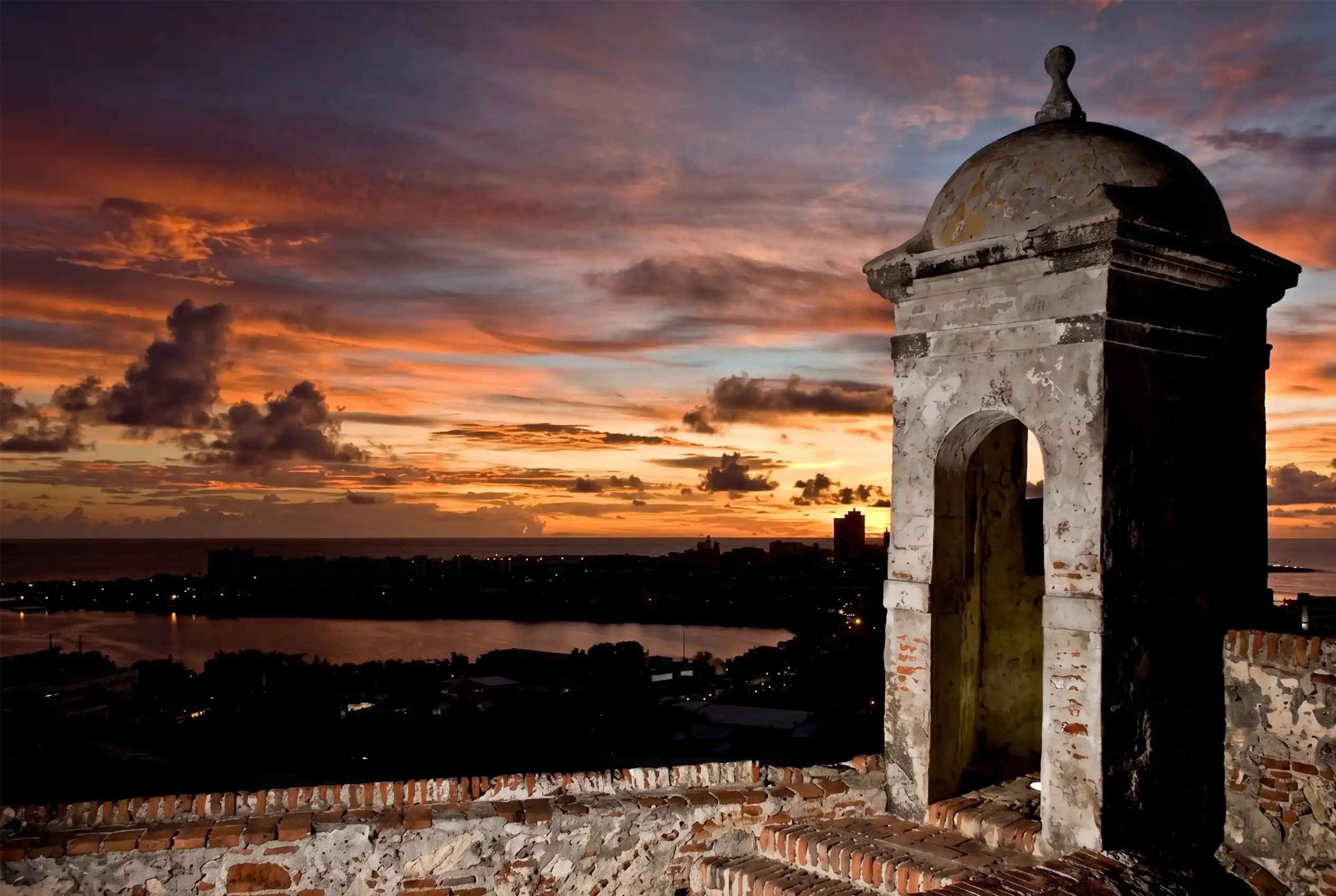
The walls of Cartagena are the most photographed feature of the city and, probably, the least fully experienced. Most visitors stop at a couple of spots, take photos and move on. But the full perimeter walk — with enough time and no rushing — is a different experience: over seven miles of history built in coral stone, with the Caribbean on one side and the Historic Center on the other.
This guide covers what you need to know to visit the walls properly: the history in brief, how to organize the walk, the best sections and viewpoints, and the timing considerations for avoiding both the heat and the crowds.
Quick answer
Do the Cartagena city walls have an entrance fee? The exterior walkway along the walls is free and accessible at any time. Some elevated sections and bastions have controlled access. Castillo de San Felipe de Barajas, which is part of the defensive system but separate from the main wall perimeter, has a paid entry.
How long does it take to walk the Cartagena city walls? The full perimeter on foot takes two to three hours at a steady pace. Most visitors do the sunset stretch between Baluarte de Santo Domingo and Baluarte de San Francisco Javier, which takes 40 to 60 minutes.
What’s the best time to visit the walls? Sunset — between 5:00 and 6:30 PM — is the most sought-after time. The golden light on the coral stone with the Caribbean behind it is one of Cartagena’s defining images. Early morning, before 9:00 AM, is the best option for fewer crowds and cooler temperatures.
Why the walls were built
Cartagena was founded in 1533 and for its first few decades had minimal defenses. The city had gold, a strategic Caribbean position and enemies who knew it. Pirate and corsair attacks were frequent through the 16th century. The most significant was Francis Drake’s raid in 1586 — the English privateer took the city, looted it for weeks and left only after receiving a substantial ransom.
That attack was the definitive signal for the Spanish Crown. Beginning in the late 16th century and throughout the 17th, Spain built the wall system that rings the Historic Center today. The project was enormous for its time: over seven miles of fortification, averaging 30 feet high and 55 feet wide at the thickest points, built primarily from coral stone quarried from the bay floor.
The design incorporated bastions at the corners, artillery batteries aimed at the sea and a moat on the side most vulnerable to land attack. The system was never taken by force after its completion. In 1984, UNESCO designated the entire complex of Cartagena’s fortifications — including the walls and Castillo de San Felipe — a World Heritage Site.
The main sections and what to see in each
Baluarte de Santo Domingo
The most popular starting point for the sunset walk, near Plaza de Santo Domingo. Views extend over the sea and down into the Historic Center. Street vendors sell fresh fruit and artisanía at the base. This is the most crowded stretch during peak hours.
Baluarte de San Francisco Javier and the clock tower gate
The Torre del Reloj — Clock Tower — at the Puerta de la Media Luna is the main entrance to the Historic Center and one of Cartagena’s most photographed landmarks. The adjacent bastion has views toward the inner bay and the Getsemaní neighborhood. A natural arrival or departure point for the walk.
Baluarte de Santa Catalina
One of the quieter, less-trafficked stretches of the route. Open views to the Caribbean without the crowd density of the more famous spots. For those who want the sunset without the selfie sticks, this section is the better option.
Baluarte de San Ignacio and La Tenaza
The northern tip of the wall perimeter, facing the open sea. Less visited than the central sections, with unobstructed Caribbean views. The pedestrian walkway along this stretch is wide and calm.
Baluarte de San Pedro Mártir and the southern edge
The southern side of the walls faces the inner bay and the Manga neighborhood. The views here are different — more urban, with port activity and the historic neighborhoods as backdrop rather than open ocean.
How to organize the walk
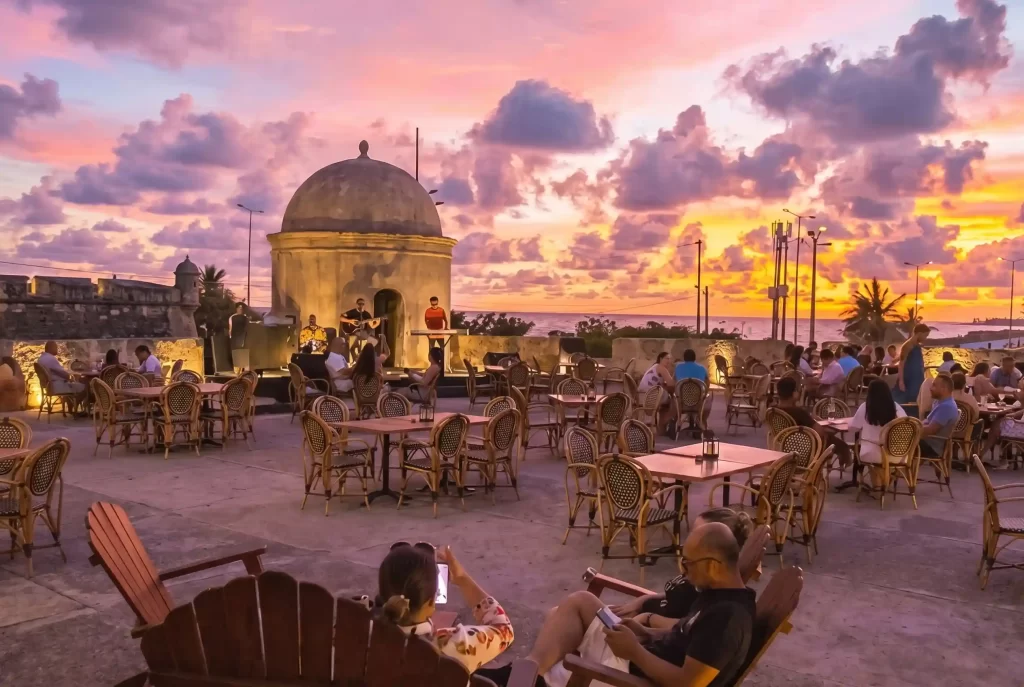
For the sunset walk: Arrive at Baluarte de Santo Domingo or the Santa Catalina section between 4:30 and 5:00 PM. Walk north along the sea-facing edge toward La Tenaza. The stretch takes 40 to 60 minutes and coincides with the best light of the day. Head down into Getsemaní for dinner when you finish.
For the full perimeter: Start early, before 8:00 AM, from the Clock Tower gate. Follow the perimeter clockwise to complete the circuit. Bring water, sunscreen and comfortable shoes. Cartagena’s midday heat — between 10:00 AM and 4:00 PM — makes that window the least advisable for an extended walk.
For photography: Early morning has soft light and fewer people. Sunset has better light but more foot traffic. The Baluarte de Santa Catalina and La Tenaza sections have less crowd at any hour.
Practical tips
- Water and sunscreen are non-negotiable for any walk longer than 30 minutes in Cartagena’s heat.
- Street vendors along the busier sections are persistent. A clear, polite “no thanks” while keeping walking works fine.
- Some wall sections have limited lighting at night. The sunset walk is easy in the main sections, but the more isolated stretches aren’t advisable after 9:00 PM.
- Wheelchair access exists on some sections but the full perimeter has uneven surfaces and slopes in several areas.
- The most efficient combination is a sunset walls walk followed by dinner in Getsemaní — two plans in one without extra transit.
The walls, Castillo de San Felipe and the full defensive system
The city walls and Castillo de San Felipe de Barajas are part of the same defensive system but are physically separate sites. The Castillo, on the hill of San Lázaro at 15 minutes by car from Bocagrande, is the largest fortress Spain built in the Americas and deserves its own dedicated visit — enough time to walk the tunnels and reach the summit.
If you want to see both, the most practical approach is a morning at the Castillo and an afternoon and evening at the walls and Historic Center. For the full overview of what to see in the walled city, the Historic Center guide organizes the visit neighborhood by neighborhood.
Getting to the walls from Hotel Regatta
From Hotel Regatta Cartagena in Bocagrande, the walled city is 10 minutes by car. The cab fare from Bocagrande to the Historic Center is a standard fixed price — no fare negotiation needed. On foot, the walk from the hotel to the Clock Tower gate along the malecón takes about 20 to 25 minutes and is a pleasant route during the cooler hours of the day.
For those who want to combine a beach morning in Bocagrande with a sunset walls walk, the logistics are simple: beach or rooftop pool until 4:00 PM, cab to the Historic Center, sunset walk along the walls, dinner in Getsemaní, cab back to the hotel. A full day with two very different experiences and no complicated planning.
The hotel restaurant serves breakfast from 6:30 AM, with continental breakfast for guests running until 10:00 AM — enough time to fuel up before heading out for an early walls walk before the heat sets in.
Book direct with Hotel Regatta Cartagena
Stay 10 minutes from the city walls, with the Caribbean in front of the hotel. Best rate guaranteed when booking direct.
Frequently asked questions
Do the Cartagena city walls have closing hours?
The main pedestrian walkway along the walls is accessible at any time. Some bastions and elevated sections may have restricted access during specific hours. The most popular stretch — the sunset walk — has no time restrictions on the main sections.
Can you walk on top of the walls or only alongside them?
In several sections, you can walk on top of the wall itself, particularly between Baluarte de Santo Domingo and La Tenaza. That elevated route — with the Caribbean on one side and the Historic Center rooftops on the other — is one of Cartagena’s most distinctive walks.
What’s the best viewpoint on the Cartagena city walls?
The stretch between Baluarte de Santo Domingo and Baluarte de Santa Catalina has the best Caribbean sunset views. Baluarte de San Francisco Javier near the Clock Tower offers views toward the inner bay and Getsemaní.
Are the walls well maintained?
Generally yes. The Historic Center receives ongoing conservation investment. Some sections periodically have restoration work that may temporarily limit access to specific areas.
Is it safe to walk the walls at night?
The busier tourist sections near Santo Domingo and the Clock Tower are fine at night with regular foot traffic. The more isolated perimeter stretches are less advisable after 9:00 PM.
Can I hire a guide for the walls walk?
Yes. Certified tourism guides are available at the main access points to the Historic Center. The hotel can help arrange guides for historical walking tours of the walls and city.