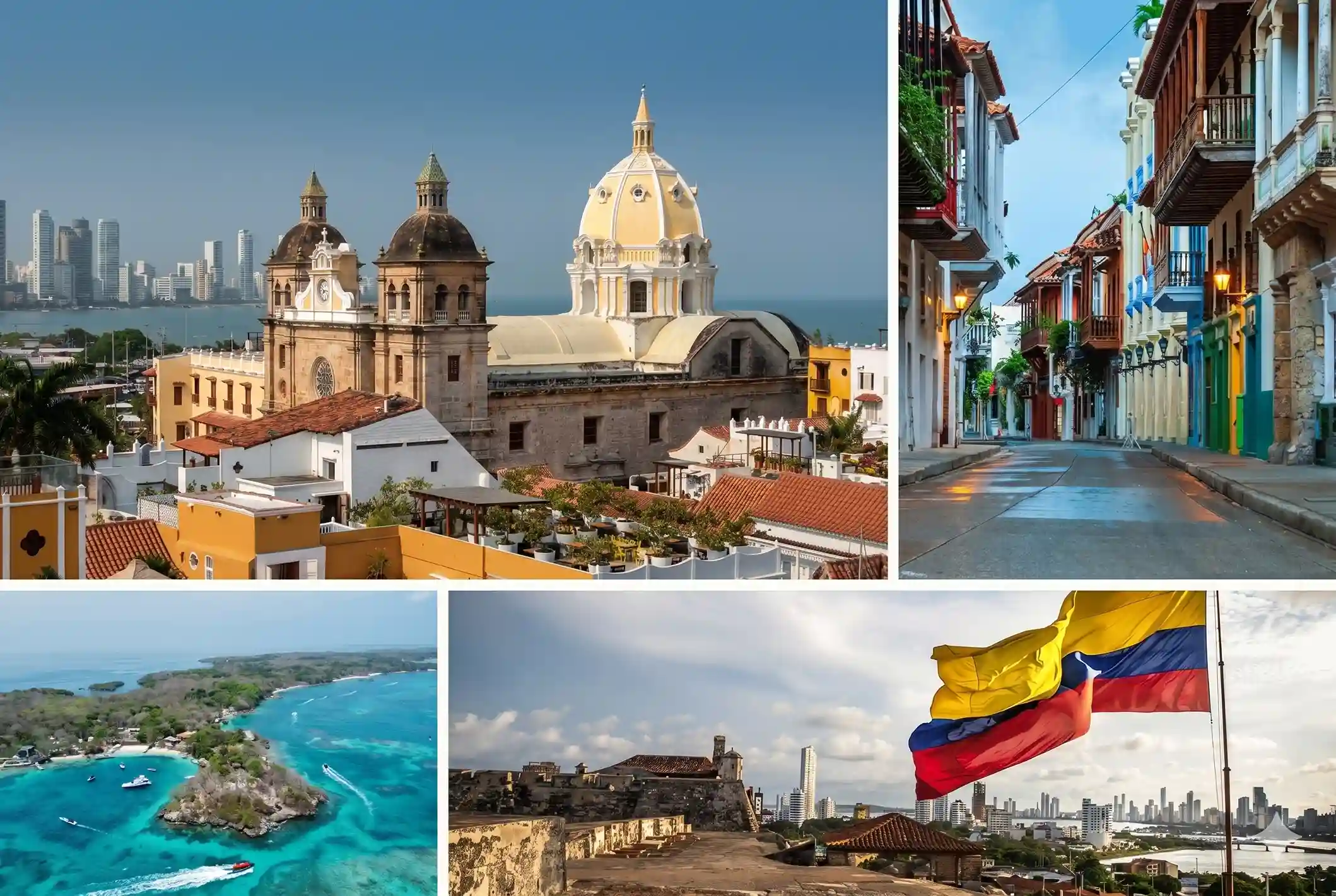
Two coastal cities, the same sea, very different trips. Cartagena and Santa Marta are Colombia’s most visited Caribbean destinations and, while both sit on the northern coast and both have beaches, the experience of traveling to one versus the other is quite different. There’s no universally correct answer — there’s a more correct answer for each type of traveler.
This comparison doesn’t declare a winner. What it does is break down what each destination actually offers, where they differ and which one fits better with what you’re looking for: the type of trip, the budget, the time available and what your group actually cares about.
If you end up leaning toward Cartagena, this article also covers why Bocagrande is the most practical base for most visitors — and what Hotel Regatta Cartagena brings to that equation.
Quick answer
Which is better, Cartagena or Santa Marta? It depends on your trip. Cartagena has more history, colonial architecture, nightlife and urban tourism. Santa Marta offers access to nature, the Sierra Nevada, Tayrona National Park and beaches that are far from urban development. For couples, culture and history: Cartagena. For nature, hiking and untouched beaches: Santa Marta.
Which is more expensive? Cartagena tends to be pricier for accommodation and restaurants, especially in the Historic Center and Bocagrande. Santa Marta has more affordable options overall, though access to Tayrona comes with its own costs.
Can you visit both in the same trip? Yes. The two cities are about four hours apart by bus or an hour by plane. Many travelers split three or four nights between each, particularly during longer vacations.
Cartagena: A city with its own character
Cartagena reads in layers. The 16th-century walls surround a historic center with narrow streets, flower-draped balconies and colonial plazas that have been receiving visitors for centuries. Outside the walls, Bocagrande is a modern beachfront district with hotels, restaurants and nightlife. Further in, Getsemaní is the neighborhood with the most distinct identity in the entire city.
What Cartagena has that Santa Marta doesn’t
Cartagena’s Historic Center is a UNESCO World Heritage Site. That’s not a decorative detail — it means there’s a preserved colonial architecture at a scale that doesn’t exist anywhere else in Colombia. The walls, the Castillo de San Felipe de Barajas, the 17th-century churches and the interior courtyards of the casas grandes in San Diego are part of the trip in themselves.
Cartagena’s nightlife is also a real argument. The Historic Center has restaurants, bars and live music running late, with a density of options that Santa Marta can’t match at the same level. For couples or adult groups who want to combine beach time with culture and good evenings out, Cartagena has a clear edge.
Access to the Rosario Islands is another point in its favor. Less than an hour by speedboat from Cartagena, this archipelago has turquoise waters and coral reefs that don’t require complicated planning.
Where Cartagena falls short
Cartagena’s beaches are not the best on the Colombian Caribbean. Bocagrande Beach is urban, accessible and convenient, but it’s not the postcard image of white sand and crystal-clear water some travelers expect. For that, you need to go to the islands. The Historic Center can also feel crowded in high season — prices go up, the most popular restaurants fill up and the experience gets busier.
Santa Marta: Nature before architecture
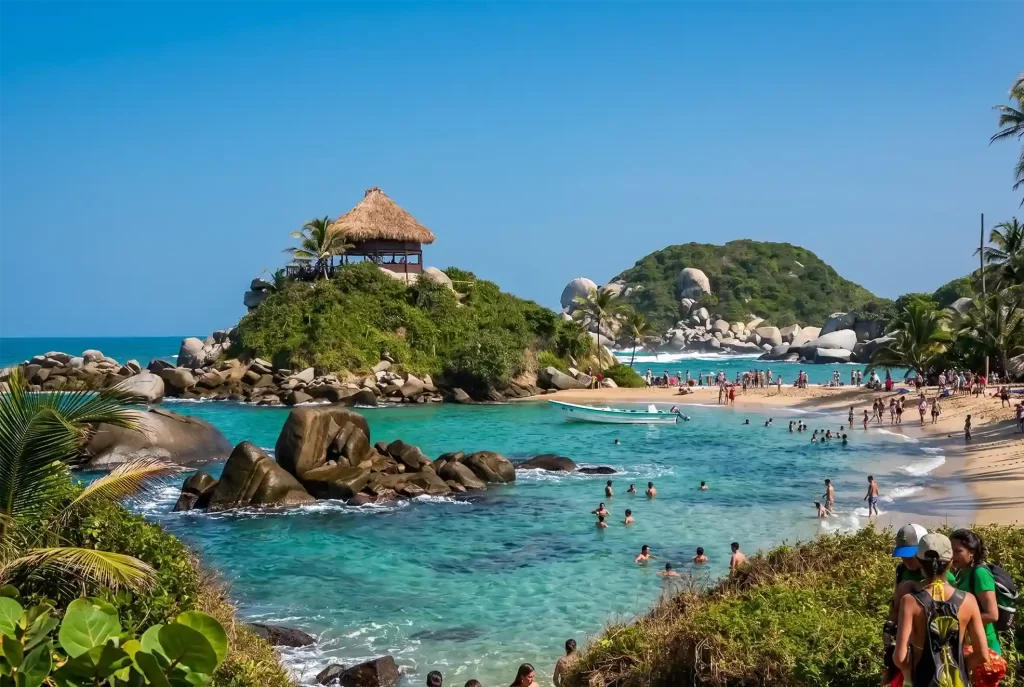
Santa Marta is Colombia’s oldest coastal city and has its own history, but its main tourism argument isn’t the urban center. It’s what surrounds it: Tayrona National Natural Park, the Sierra Nevada de Santa Marta, Ciudad Perdida and a coastline with beaches that range from easy-access to ones that require hours of hiking to reach.
What Santa Marta has that Cartagena doesn’t
Tayrona National Park is Santa Marta’s primary asset. A national park with jungle beaches, wildlife and a natural setting that simply doesn’t exist near Cartagena. For travelers whose trip is built around nature, hiking or diving in less developed environments, Tayrona changes the calculation entirely.
Ciudad Perdida is another exclusive differentiator. The four-to-six-day trek to the Teyuna archaeological site has no equivalent in the region and draws a specific type of traveler with genuine interest in indigenous culture and physical adventure.
The beaches around Santa Marta — places like Palomino or those inside Tayrona — also have a degree of naturalness that Cartagena’s urban beaches simply can’t match.
Where Santa Marta falls short
Santa Marta’s downtown doesn’t have the preservation level or cultural density of Cartagena’s Historic Center. The food scene and nightlife are more limited. For travelers who want urban experience, architectural history or a developed culinary scene, Santa Marta comes up short.
Head-to-head comparison by travel type
| Type of Trip | Cartagena | Santa Marta |
| Couples / honeymoon | ✔ First choice | Possible, fewer urban romantic options |
| Families with kids | ✔ Comfortable, solid hotel infrastructure | Good if kids can handle Tayrona hiking |
| Nature travelers | Rosario Islands | ✔ First choice (Tayrona, Sierra Nevada) |
| Culture and history | ✔ First choice | Limited in the urban center |
| Nightlife | ✔ First choice | Moderate |
| Budget travelers | Possible in Getsemaní | ✔ More affordable overall |
| Corporate travel | ✔ Better hotel infrastructure | Limited |
| Adventure and trekking | Maritime excursions | ✔ First choice (Ciudad Perdida) |
| Food scene | ✔ More varied and developed | Basic |
How long to spend in each
Three nights in Cartagena is enough to cover the Historic Center, do a day trip to the Rosario Islands and have a couple of evenings to enjoy Bocagrande and the walled city at night. Four or five nights let you slow down and explore neighborhoods like Getsemaní more carefully.
In Santa Marta, three nights is the minimum for a Tayrona visit with meaningful beach time. The Ciudad Perdida trek requires at least four additional days, making it its own trip within a trip.
If you have a week available, the most common combination is three nights in Cartagena and four in Santa Marta, or the reverse. It works well in either order.
Why Bocagrande is the best base in Cartagena
For a short trip to Cartagena, hotel location matters more than it might seem. Bocagrande has beach access, walkable restaurants, easy connection to the Historic Center in ten minutes and the docks for Rosario Islands excursions in the same neighborhood. You don’t have to move much to do everything the weekend plan calls for.
Hotel Regatta Cartagena is on the Avenida Malecón, Carrera 1 #5-82, right on the waterfront in Bocagrande. It has rooms from Standard to the Sextuple Suite for groups of up to six. Superior and Deluxe Premium rooms have direct Caribbean views. The hotel has a rooftop pool, direct beach access, restaurant, bar and 24-hour front desk.
For couples planning a romantic trip to Cartagena, the honeymoon guide covers the best plans and stays in detail. And if you’re still deciding between Bocagrande and the Historic Center for your accommodation, the Bocagrande vs Historic Center comparison lays out the tradeoffs clearly.
Book direct with Hotel Regatta Cartagena
If Cartagena is your destination, booking direct with Hotel Regatta guarantees the best available rate with no intermediary commissions.
Frequently asked questions
Which is better for a honeymoon, Cartagena or Santa Marta?
Cartagena has more options for an urban romantic trip: candlelit restaurants, colonial streets, sunset walks along the walls and boutique hotels in the Historic Center. Santa Marta can be romantic in a more natural setting, but the infrastructure oriented toward couples is more limited.
Can I visit Santa Marta from Cartagena as a day trip?
The bus ride takes four to five hours. It’s technically possible but exhausting for a day excursion. The most practical approach is to dedicate at least two or three nights to Santa Marta if you go.
Cartagena or Santa Marta for a trip with kids?
Both work with children but in different ways. Cartagena is more comfortable in terms of hotel infrastructure, restaurants and organized activities. Santa Marta is a good option if the kids are old enough to handle hiking in Tayrona.
When is the best time to visit Cartagena?
The dry season, roughly December through April, has the sunniest days and calmest water. But Cartagena works well year-round. The wetter months still have warm water and fewer tourists. For the full breakdown on seasons and weather, the best time to visit Cartagena guide covers it in detail.
Which city has better food?
Cartagena has a more developed food scene, with greater variety across the Historic Center and Bocagrande. Santa Marta has good fresh seafood but less diversity. If food is a priority for your trip, Cartagena wins.
Is it safe to travel to both cities as a tourist?
Both are established tourist destinations with well-trafficked, safe areas for visitors. As in any city, some neighborhoods warrant more caution than others. The tourist areas of Cartagena’s Historic Center, Bocagrande, Santa Marta’s Rodadero and Tayrona are safe for tourists with standard precautions.